
Toys for Kids with Down Syndrome
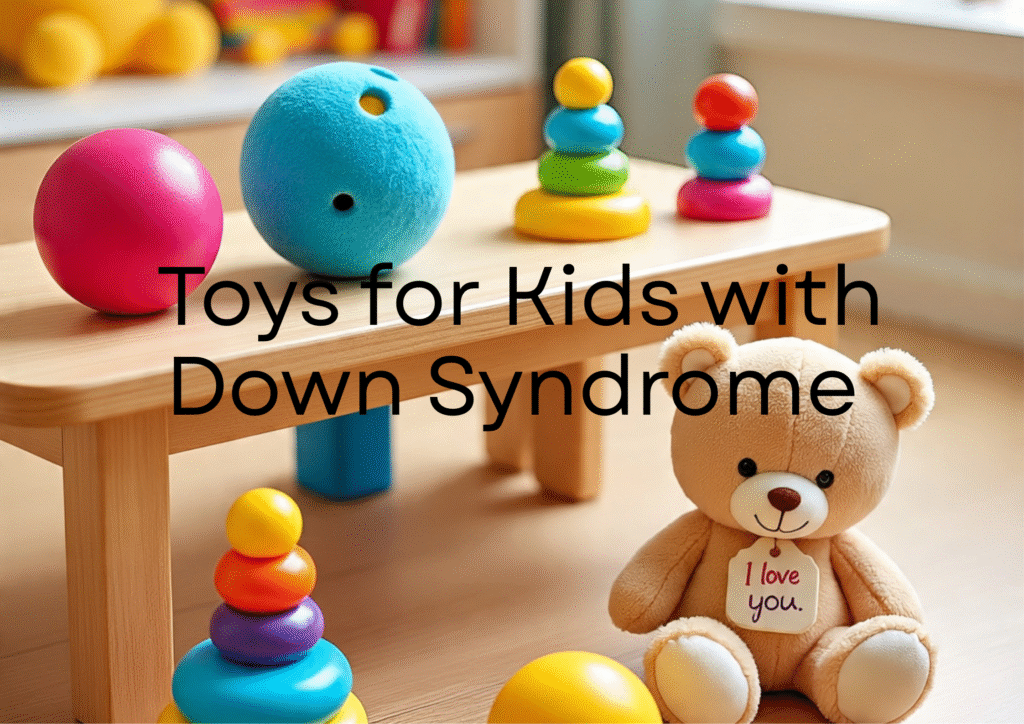
Down Syndrome Toys are an important means of helping children with Down Syndrome in the development process. These toys are able to stimulate motor skills, communication, cognitive abilities, and socialization in a fun and interesting manner. The choice of developmental toys will make sure that children with the Down Syndrome enjoy personalized play time which enhances their growth and learning.
Significance of Developmental Toys to Down Syndrome Child
Down Syndrome kids are generally delayed in fine and gross motor skills, speech and cognitive processing. Their senses can be stimulated, coordination can be enhanced, language can be acquired, and social interaction can be provided by the use of developmental toys that are specific to these areas. As an example, gross motor skills toys would foster balance and strength whereas the fine motor skills toys would foster hand-eye coordination and dexterity. Sensory toys are important because they offer tactile, visual and auditory stimulation; an essential phase towards sensory processing.
The 10 Best Developmental Toys used with Down syndrome children
Rody Horse
This inflatable horse toy is a promotion of core strength, balance and gross motor skills. Sitting and bouncing helps the children to develop physically in a fun way with extra encouragement through the play sounds and movements.
Wooden Blocks
Wood blocks are versatile and old fashioned, they help develop fine motor skills, problem-solving, creativity, and hand-eye coordination. Children are taught to pile up, count and experiment with shapes by constructing towers and knocking them down.
Shape Sorting Cube
Good to teach shapes and color in addition to fine motor skills and coordination by sorting activities. It also develops problem solving skills and hand dexterity.
Play-Doh and Putty
This type of product as Play-Doh Modeling Compound or Thinking Putty will assist the child in finger strength, hand dexterity, and creativity. The manipulation of these materials helps in the fine motor and grip strength.
Stacking Cups
Stacking cups are good with toddlers, as they develop hand-eye coordination, counting, and spatial awareness. Sensory play can also be done using them in bath time or sand and water activities.
Balls and Ride-on Toys
Ride-ons and soft balls are examples of toys that promote gross motor skills by enhancing the sense of balance, coordination, and muscle strength. Catching or riding can assist a child to build some space consciousness and physical health.
Fine Motor Toys (e.g. Spike The Fine Motor Hedgehog, Dimpl)
These toys are aimed at finger strength and accuracy, which improves children to control small objects, which would be needed in their everyday activities such as dressing or writing.
Interactive Flashcards and Interactive Books
The development of visual and language is boosted with books that contain pictures and words, as well as interactive flashcards. These toys contribute to the vocabulary development and cognitive identification.
Sensory Toys (e.g. textured balls, sensory mats, musical instruments)
Sensory toys involve more than one sense to enhance the abilities of sensory processing, attention, and social interaction. The toys offer either relaxing or energetic experiences.
Magnetically Operated Tiles and Building Sets
The magnetic tiles foster imagination, spatial thought and hand-eye activity. Problem-solving, counting, and shape recognition are taught in a practical manner through building sets.
Benefits of Using These Toys
Regular use of these developmental toys can enhance the physical development, communication, socialization and cognitive development of children with the Down Syndrome. They make education enjoyable and reachable and make the children feel involved and encouraged. These toys too promote independence and confidence when the children acquire the much needed life skills at their own pace.
FAQs
Which are the most suitable toys of toddlers with Down Syndrome?
Gross and fine motor toys, such as stacking cups, wooden blocks, playdough, and ride-on toys, are very helpful.
What are the ways in which toys can be used to support language development in Down Syndrome kids?
Interactive books, flashcards and toys that induce dialogue are useful in enabling children to develop vocabulary and communication skills.
Do sensorial toys play a role with a child with Down Syndrome?
Yes, sensory toys are beneficial in sensory processing, which can be a difficult task, with them being able to offer sensory stimulation through touch, sight, and sound.
Will these toys apply to all ages?
Most toys such as blocks and sensory mats can be modified to various ages which can offer long-term developmental value.
Which toy should I select when I have a child with Down Syndrome?
Based on the development phase of your child, concentrate on the toys that suit the exact needs of the child either in motor skills, sensory input or communication skills.
This resource provides an in-depth overview of the toys that would promote development advancement in children with Down Syndrome. A consistent use of these tools can also bring a lot of positive impact to the overall development and happiness of a child.
Conclusion
Children with Down Syndrome do not simply have toys, but are also using toys as a potent means of growth and development. The selection of appropriate toys which suits the special needs of a child facilitates motor, language, cognition and socialization. The right playthings develop children, whether it is a gross motor toy such as the Rody Horse or a fine motor and a sensory toy. The investment in these developmental toys helps the parents and the educators in giving the child a rich and supportive play environment that is necessary in his or her development.
About the Author